Blessed ones, I give you greetings from my end. Relax and read through quietly and enjoy what you reading.
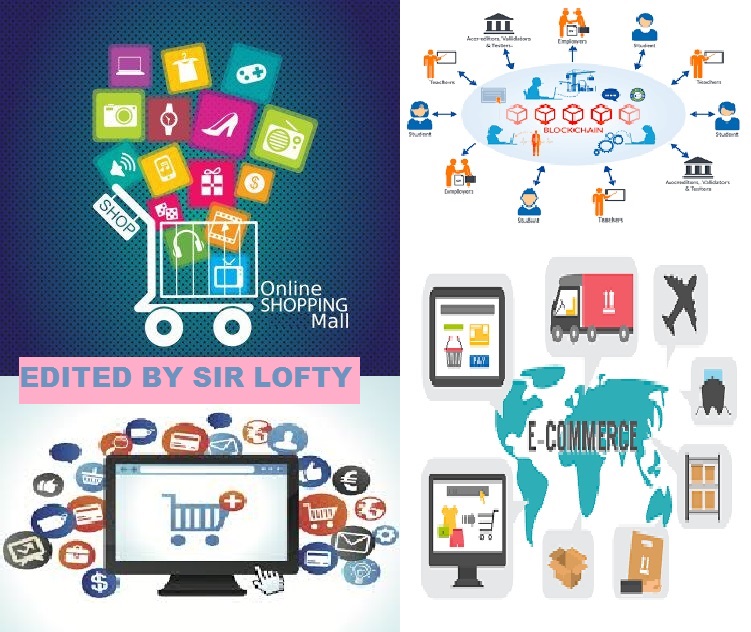
TODAY’S HEADLINES
Introduction to E – commerce
Research objectives
Electronic commerce Definitions
References
Introduction
Ever since the introduction of e-commerce in the 1990s thanks to the World Wide Web (WWW), online trade has taken the world by storm. Empowered by the Internet, e-commerce quickly spread out to most businesses as companies found it to be an effective way of communication between parties (Nguyen, 2014). Since its first gain prevalence in the 1990s,electronic commerce (e-commerce) has revolutionized business. Profound changes on the competitiveness and industrial structure are happening due to introduction of e-commerce.
Travel and music industries are some examples of how significant changes to their business models as a result of e-commerce (Shia et al. 2015).
While the use of e-commerce is obviously beneficial and has been implemented by millions of companies all over the world, in line with its benefits, companies have also faced certain challenges. Among others, they have realized that ensuring customer satisfaction and developing customers’ trust of e-commerce services is no easy task, yet it is a very important task for the long-term growth of a business. Previous research have shown that many e- retailers experience difficulty maintaining customer satisfaction and trust in the face of rapid growth of Business-to- Consumer (B2C) e-commerce applications (Someswar et al., 2002).
Liao et al. (2006) stated that over the past decade, the explosive growth of the World Wide Web (the Web), coupled with the rapid expansion of public access to these media, had bolstered the practice of doing business on-line and had attracted a great deal of attention
from entrepreneurs, executives, and investors. With the growth of Information Technology, electronic commerce (e-commerce) is now seen as the new business model and platform that will have a similar, if not bigger, it will impact on the business communities and industries than traditional commerce.
Research Objectives
The present study focuses on small and medium enterprises (SMEs) decisions in adopting e-commerce with the objective of strengthening customer satisfaction.
E-commerce can be considered as a new way of conducting business and its influence is increasing every year (Chong, 2008).
The term “e-commerce” is described by Chaffey (2009) as all electronically mediated transactions between the company and third party. At the same time e-commerce not only provides the companies with a huge amount of information, increases the speed of the transactions and decreases costs, but also reshapes their marketing strategies and practices. The reasons for implementing an e-commerce strategy can vary from company to company.
According to Xu and Quaddus (2009), while in the big companies the
leading motives are to improve efficiency in their internal processes; small companies are more concerned with the competiveness. Successfully adoption of e-commerce is a slow
process and it cannot be completed at once, but rather in small series of adoption processes in which the company moves gradually from simple to more complex stages of e-commerce (Brand and Huizingh, 2008).
Electronic commerce definitions
The increasing number of the publications past few years leads to greater variation of the definitions of e-commerce.
The first definitions were simple – e-commerce has been defined
as a process of buying and selling of goods over the Internet. The term was developed later and it was added “exchange of information” in addition to “buying and selling of goods” (Chong, 2008, pp. 470).
Rainer and Cegielski (2011, pp. 201) defines e-commerce as a “process of buying, selling, transferring, or exchanging of products, services, and/or information via computer networks,
including the Internet”. Moreover, this supposes continuous flow of information, before and after the process of sales.
Rayport and Jaworski (2002) add that the process of exchange is technology mediated and that it is based on inter and intra organizational activities for facilitating such exchange. In this context, Chaffey (2007, p. 8) considers e-commerce as “all electronically mediated transactions between an organization and any third party”.
Summarizing, e-commerce is not restricted to buying and selling, and it has become a more open term than before. Therefore, it can be summarized that e-commerce is a process of
integration of all company’s processes, activities and services toward buying and selling of products and exchange of information and funds with the company’s partners via computer
networks and electronic technologies.
The term e-commerce and e-business are interchangeable (Rainer and Cegielski, 2011).
Many people use e-business or even e-marketing, talking about e-commerce in a broader sphere (Schneider, 2011). Good illustration of the closeness between the two terms can be found in the IBM definition of e-business: “the transformation of key business process through the use of internet technologies” (Schneider, 2011, p. 4).
The End
References
Ahmad Salih Alnaser
Amman Arab University
20 PUBLICATIONS 116 CICITATIONS
Mohammed Abdulellah Saeed
Universiti Tenaga Nasional (UNITEN)
6 PUBLICATIONS 19 CICITATIONS
Nahed Habis Alrawashedh
Amman Arab University
11 PUBLICATIONS 4 CITATIONS
Abid, A., Rahim, M., Sheepers H. (2011). Experienced Benefits and Barriers of e-Business
Technology Adoption by SME suppliers. Available: http://www. ibimapublishing.com/
journals/ CIBIMA/cibima.html, Accessed: November 2, 2016.
Blogged by Harry Sir Lofty ™
©AUGUST 2020.
0240787223
 BADENYA HARRY
Sir i am Seth i have READ ABOUT CHY MAILL anda i am interesting to join But i leaved in Brazil. I WANT to know How i can join ? Thank you
LikeLike